Introduction
There’s something magnetic about walking into a room that feels confident, polished, and quietly powerful. That feeling is exactly what mad men interior design delivers—spaces that don’t shout for attention but still command it effortlessly.
Inspired by the visual language of the 1950s and 1960s, this style blends sophistication with restraint. It’s not just about furniture or color palettes; it’s about attitude. Clean lines, intentional layouts, and materials that age gracefully all come together to create interiors that feel timeless rather than trendy.
In recent years, mad men interior design has quietly resurfaced in modern homes, offices, and studios. People are craving spaces that feel grounded, masculine yet warm, and thoughtfully composed—especially in a world overloaded with fast decor and visual noise.
What makes this style so powerful is its adaptability. Whether you’re styling a home office, a city apartment, or a full corporate space, the principles behind mad men interior design still feel incredibly relevant today.


Table of Contents
Origins of Mad Men Interior Design
Core Characteristics of the Style
Mad Men Interior Design Color Palette Explained
Furniture That Defines the Look
Layout, Space Planning, and Flow
Materials and Textures Used in Mad Men Interiors
Lighting Styles of the Mad Men Era
Styling Accessories and Decorative Details
Mad Men Interior Design in Modern Homes
Office Spaces Inspired by Mad Men Interiors
Cultural Influence and Enduring Appeal
Infographic: Mad Men Interior Design at a Glance
Frequently Asked Questions
Conclusion
Origins of Mad Men Interior Design
Historical Roots in Mid-Century America
Mad men interior design is deeply rooted in post-war America, a time when optimism, ambition, and corporate power defined daily life. Homes and offices reflected success through structure, order, and subtle luxury rather than excess.
Design during this era focused on progress. Open plans replaced cluttered Victorian layouts, and furniture became lower, sleeker, and more functional. This shift mirrored changing social dynamics, where efficiency and image mattered more than ornamentation.
Corporate Culture as a Design Influence
A defining feature of this style is its connection to professional environments. Executive offices, advertising agencies, and boardrooms heavily influenced residential interiors. Desks, credenzas, and built-in storage weren’t just practical—they symbolized authority and control.
That’s why mad men interior design often feels disciplined. Every piece has a purpose, and nothing feels accidental.
Core Characteristics of the Style
Clean Lines and Structured Forms
The backbone of this aesthetic lies in geometry. Straight lines dominate, while curves are used sparingly for contrast. Furniture legs taper elegantly, and silhouettes remain crisp and uncluttered.
Balance Between Masculine and Warm
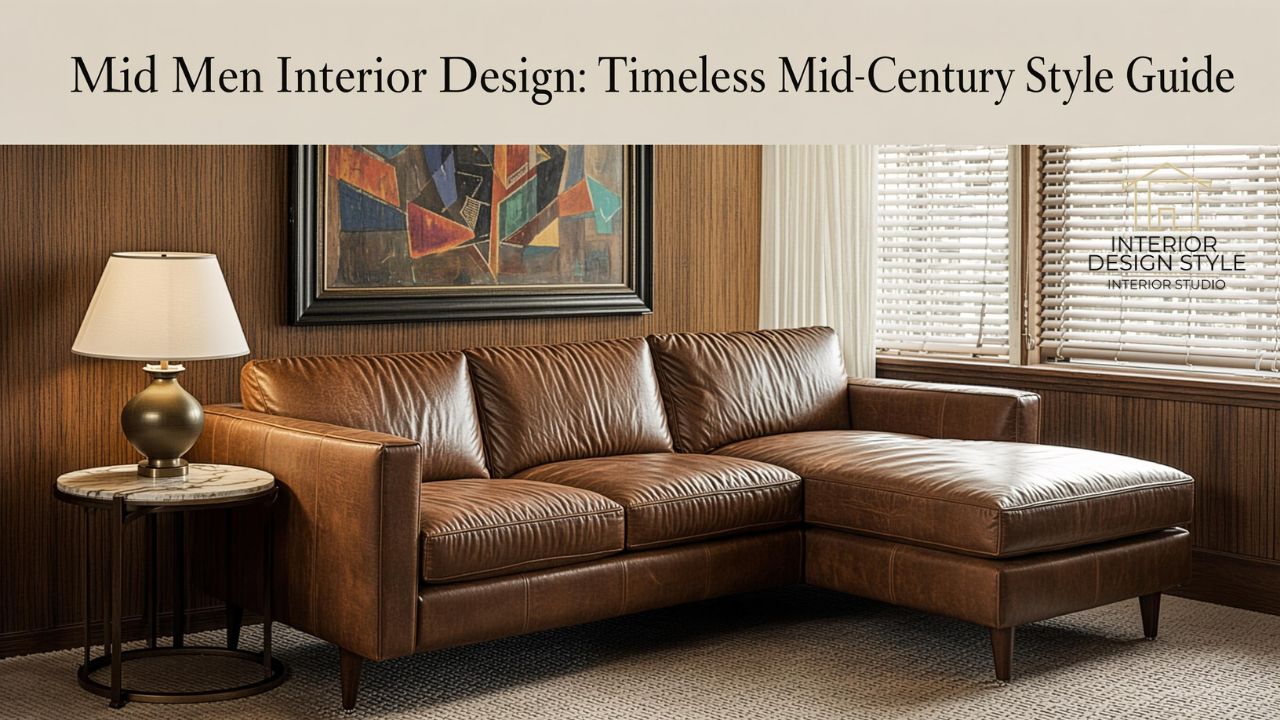
This style is often described as masculine, but it’s not cold. Warm woods, soft leather, and muted textiles soften the sharp lines, creating interiors that feel inviting rather than sterile.
Intentional Minimalism
Unlike modern minimalism, mad men interior design doesn’t feel empty. Instead, it’s selective. Fewer objects are used, but each one carries visual weight and meaning.
Mad Men Interior Design Color Palette Explained
Dominant Colors of the Era
The color palette is restrained but emotionally rich. Popular tones include:
- Walnut brown
- Teak
- Olive green
- Mustard yellow
- Burnt orange
- Deep navy
- Charcoal gray
These colors were chosen for longevity, not trends. They photograph beautifully and age well over time.
How Contrast Is Used
Contrast plays a subtle but crucial role. Dark furniture is often balanced with lighter walls, while bold accent colors appear in art, upholstery, or rugs rather than overwhelming the space.
Used correctly, mad men interior design feels calm yet confident, never chaotic.
Furniture That Defines the Look
Iconic Seating Pieces
Low-profile sofas with clean arms, tufted leather chairs, and sculptural lounge seating define the era. Comfort matters, but form always comes first.
Case Goods and Storage
Credenzas, sideboards, and wall-mounted cabinets are essential. These pieces emphasize horizontal lines and keep spaces visually grounded.
Materials and Craftsmanship
Solid wood construction, visible grain, and quality joinery are non-negotiable. Furniture wasn’t meant to be replaced every few years—it was built to last decades.


Layout, Space Planning, and Flow
Open Yet Defined Spaces
Rooms feel open, but zones are clearly defined. Rugs, furniture placement, and lighting help create separation without walls.
Symmetry and Visual Order
Balance is key. Furniture arrangements often mirror each other, reinforcing a sense of calm and control.
This structured approach is one reason mad men interior design feels so visually satisfying—it’s easy for the eye to rest.
Materials and Textures Used in Mad Men Interiors
Wood as the Foundation
Wood dominates these interiors. Teak, walnut, and oak appear in floors, furniture, and wall panels, adding warmth and continuity.
Leather, Wool, and Tweed
Upholstery materials lean toward natural fibers. Leather adds authority, while wool and tweed introduce texture and comfort.
Glass and Metal Accents
Glass tabletops and brass or chrome details add lightness, preventing spaces from feeling too heavy or dark.
Lighting Styles of the Mad Men Era
Functional Yet Sculptural
Lighting isn’t just practical—it’s expressive. Floor lamps with arched arms, globe pendants, and desk lamps with metal finishes are common.
Layered Lighting Strategy
Ambient, task, and accent lighting work together. This creates depth and allows rooms to shift mood throughout the day.
Styling Accessories and Decorative Details
Art and Wall Decor
Abstract art, graphic prints, and framed typography were popular choices. Walls remained curated, never overcrowded.
Bar Carts and Accessories
Bar carts became symbols of sophistication. Alongside them, ashtrays, glassware, and sculptural objects added personality.
Textiles and Soft Furnishings
Patterns are subtle—think geometric rugs, textured cushions, and understated curtains.
Mad Men Interior Design in Modern Homes
Why It Still Works Today
This style aligns perfectly with modern living. It’s practical, visually calming, and flexible enough to adapt to contemporary needs.
Blending Old and New
Many homeowners now mix vintage-inspired pieces with modern technology. The result feels timeless rather than dated.
When done right, mad men interior design doesn’t feel nostalgic—it feels intentional.
Office Spaces Inspired by Mad Men Interiors
Authority Through Design
This style works exceptionally well in offices. It communicates professionalism, confidence, and stability without appearing flashy.
Productivity and Focus
Clean layouts, reduced clutter, and quality furniture naturally support focus and efficiency—something modern workspaces often lack.
Cultural Influence and Enduring Appeal
Design as Storytelling
Mad men interior design tells a story of ambition, discipline, and identity. That narrative continues to resonate in both personal and professional spaces.
A Reaction Against Disposable Design
As fast furniture becomes more common, many people are returning to styles that emphasize durability and craftsmanship.

Frequently Asked Questions
What is mad men interior design?
Mad men interior design is a mid-century modern style inspired by 1950s and 1960s American interiors, focusing on clean lines, rich materials, and structured layouts.
Is mad men interior design suitable for small homes?
Yes, because the style emphasizes open layouts and minimal clutter, it can actually make smaller spaces feel more organized and spacious.
What furniture pieces are essential for this style?
Key pieces include low-profile sofas, wooden credenzas, lounge chairs, and functional storage units with clean lines.
Can mad men interior design feel warm?
Absolutely. Warm woods, textured fabrics, and thoughtful lighting prevent the space from feeling cold or overly corporate.
Is this style expensive to achieve?
It can be scaled. While authentic materials cost more, many modern reproductions offer similar aesthetics at lower prices.
How does this style differ from modern minimalism?
Mad men interior design focuses more on warmth, craftsmanship, and personality, while modern minimalism often prioritizes emptiness and neutrality.
Can I mix this style with contemporary decor?
Yes, blending vintage-inspired furniture with modern elements often enhances the overall look rather than detracting from it.
Conclusion
Mad men interior design isn’t about recreating the past—it’s about adopting principles that still make sense today. Thoughtful layouts, honest materials, and intentional design choices create spaces that feel confident, calm, and enduring.
In a world chasing trends, this style quietly stands its ground. That’s its real power.